⚠ Page under construction — content and photos are still being added
Civil Pilot · RAAF · Five Flying Log Books
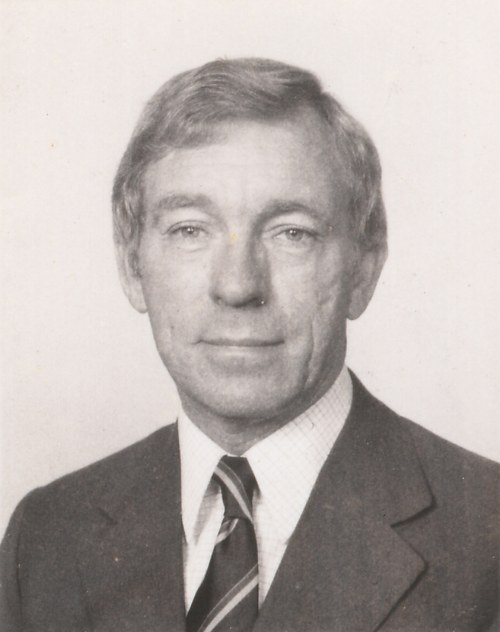
Howard R. Morris
2 December 1934 – 15 May 2026
From a Gipsy Moth over Bankstown in 1951 to the Avro Lincoln and Lockheed Neptune with the RAAF, Howard Morris’ flying career spans over 2,500 hours across five log books — civil training and instructing under his father’s flying school, Citizen Air Force Reserve service, and a full-time RAAF career flying trainers, jets and heavy aircraft.
Career overview
A flying career in five log books
2,522:10
Total aeronautical experience
5
Flying log books, 1951–1963+
1951
First solo, Bankstown
1,058:55+
Hours on Lockheed Neptune (1st pilot, day, to 30.6.1962)
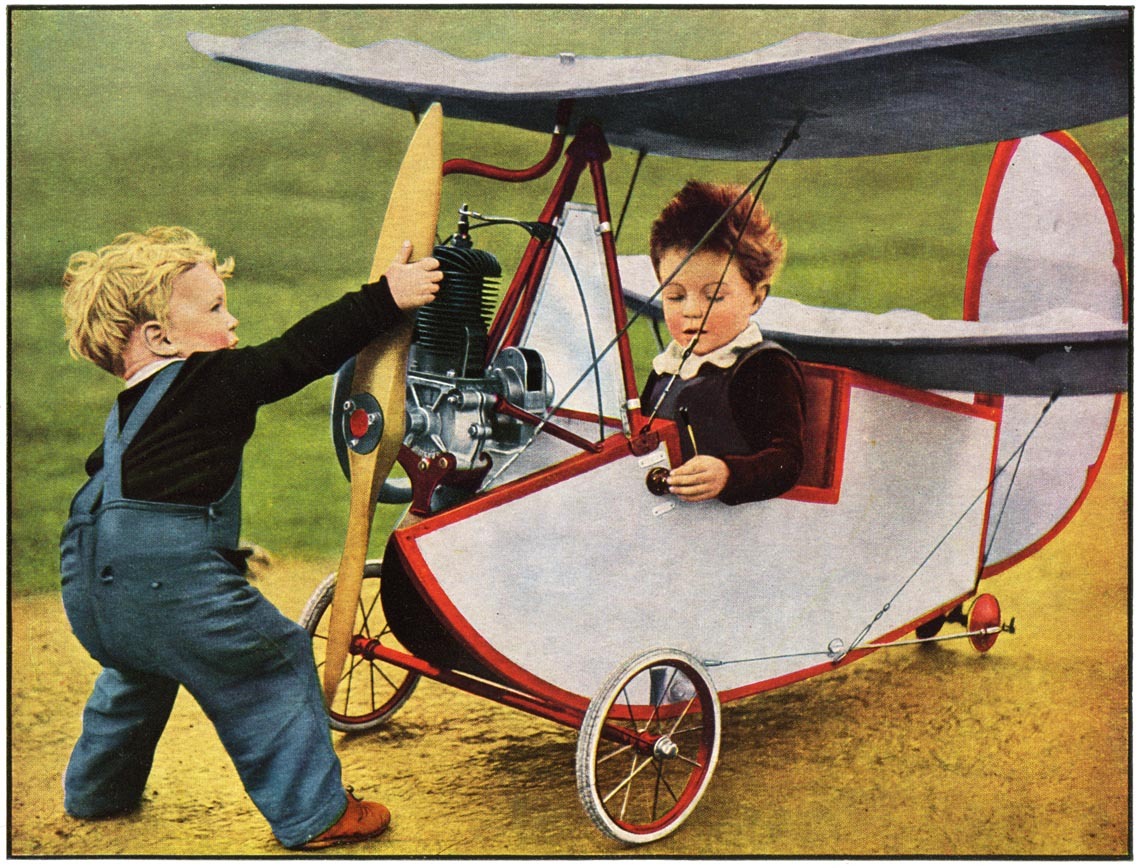
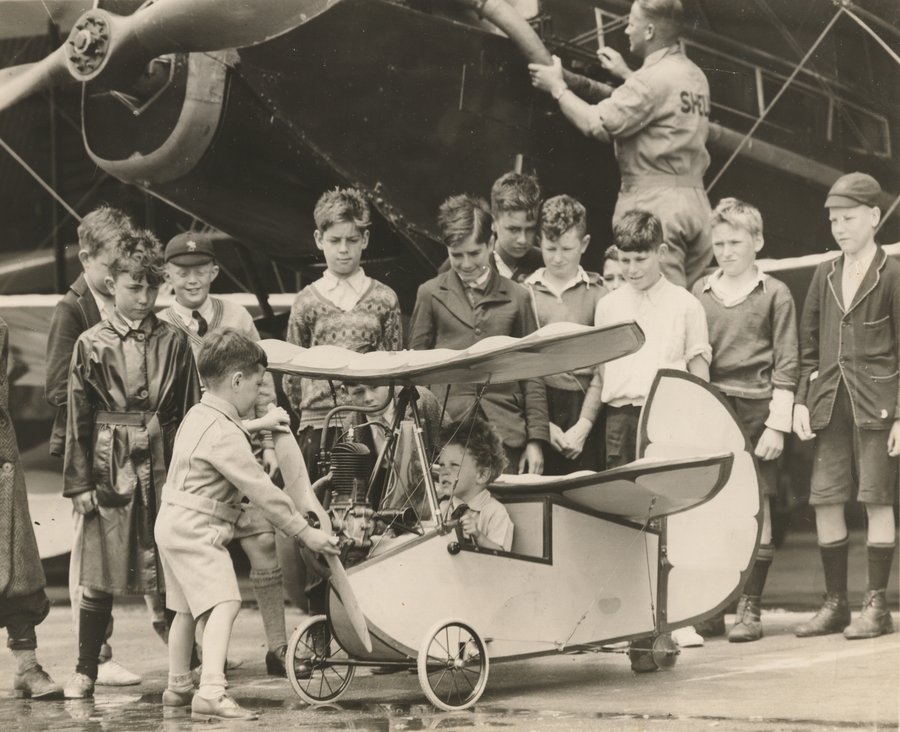
Nineteen years before he took his first RAAF flying lesson, a young Howard Morris was already a familiar sight at Essendon Aerodrome — not with a toy, but in a real, father-built “Flying Flea”, a small homebuilt aeroplane capable of taxiing under its own power. The Argus (Melbourne) reported on Howard’s third birthday on 3 December 1937 under the headline “Australia’s Youngest ‘Pilot’ Celebrates Third Birthday,” noting that Howard and his brother Eric, then four years and nine months old, were regulars at Essendon, racing their little machine along the tarmac and roads at speeds of up to 12 miles an hour.
Howard Morris spinning the propeller while his older brother Eric Morris sits in the cockpit of the family’s Flying Flea, Essendon Aerodrome, 1937.
The roles reversed — Howard in the cockpit this time, with Eric at the propeller, Essendon Aerodrome, 1937.
Howard spinning the propeller with Eric seated in the cockpit, drawing a crowd of curious boys at Essendon Aerodrome.
1951Feb, Bankstown
Training
Learning to fly at his father’s school
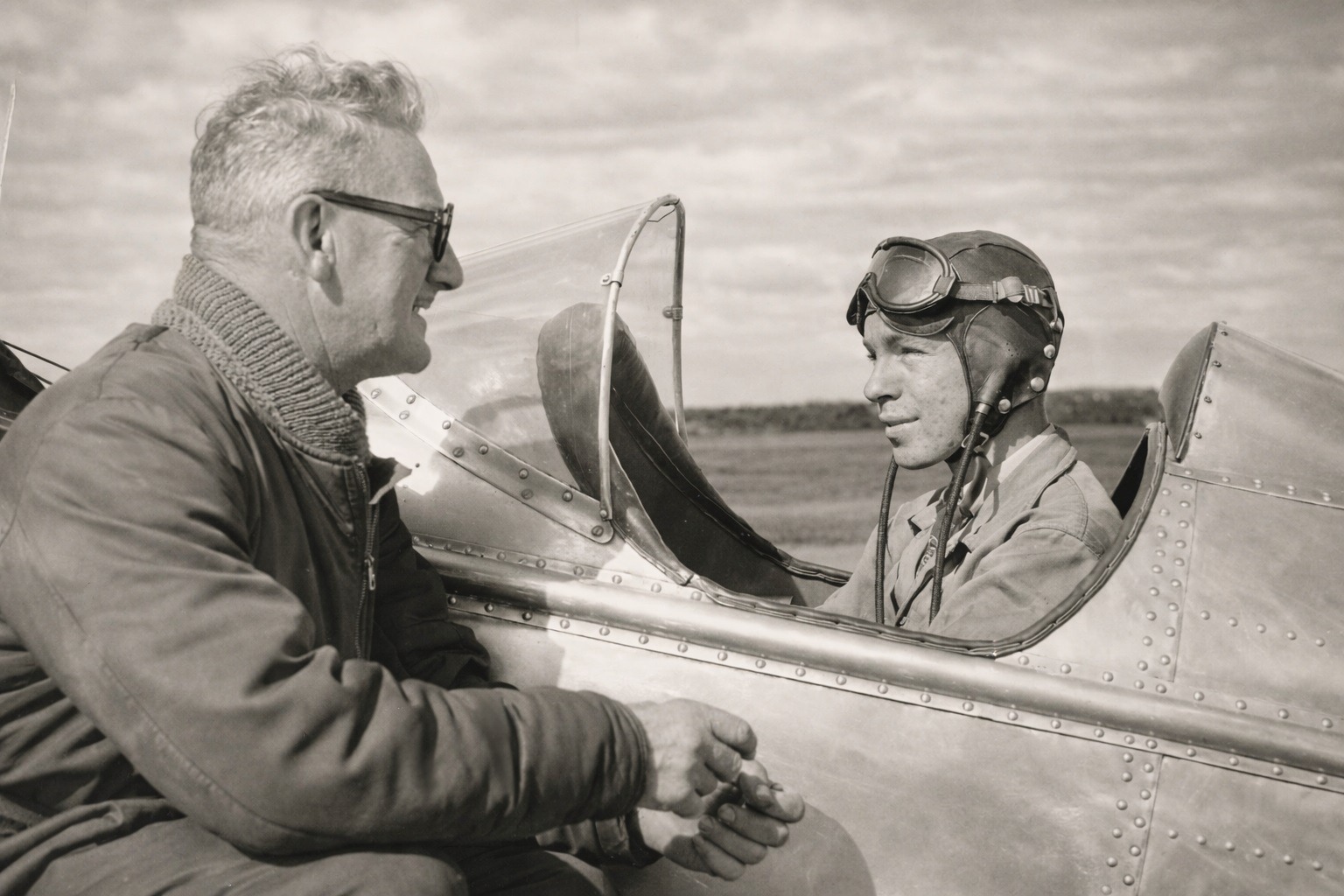
Howard began flying training on 24 February 1951 at Morris Air Service, Bankstown — the family flying school, with his father, H.K. Morris, as Chief Flying Instructor. Training began on a DH60 Gipsy Moth, VH-ULC, progressing through the standard sequence of effect of control, climbing and gliding, medium and gliding turns, spins and recovery, circuits and landings.
Howard R. Morris in the cockpit, with his father and instructor H.K. Morris, during early flying training.
19516 May
Milestone
First solo
Howard went solo for the first time on 6 May 1951, in DH60 Gipsy Moth VH-ULC, after 16 hours 25 minutes of total aeronautical experience. He soloed on the DH82 Tiger Moth a month later, on 10 June 1951, at Bathurst.
1951Oct–Dec
Licensing
“A” Licence
Howard completed his first cross-country flight in October 1951, followed by solo cross-country flights for his “A” Licence (Private Pilot Licence) on 3–4 December, and sat his test for the “A” Licence on 9 December 1951 — all flown from Bankstown under his father’s instruction and certification as Chief Flying Instructor, Morris Air Service.
1952–54Bankstown
Flying career
Building experience at Bankstown
Through 1952–54 Howard flew a widening range of types out of Bankstown — the DH82 Tiger Moth, Comper Swift, Auster, and Percival Proctor — including his first night flying in November 1952, and long cross-country flights such as Bankstown–Newcastle–Muswellbrook–Coolah–Mudgee–Bathurst–Bankstown in mid-1954. He also converted onto the Wackett Trainer under instruction from August 1954.
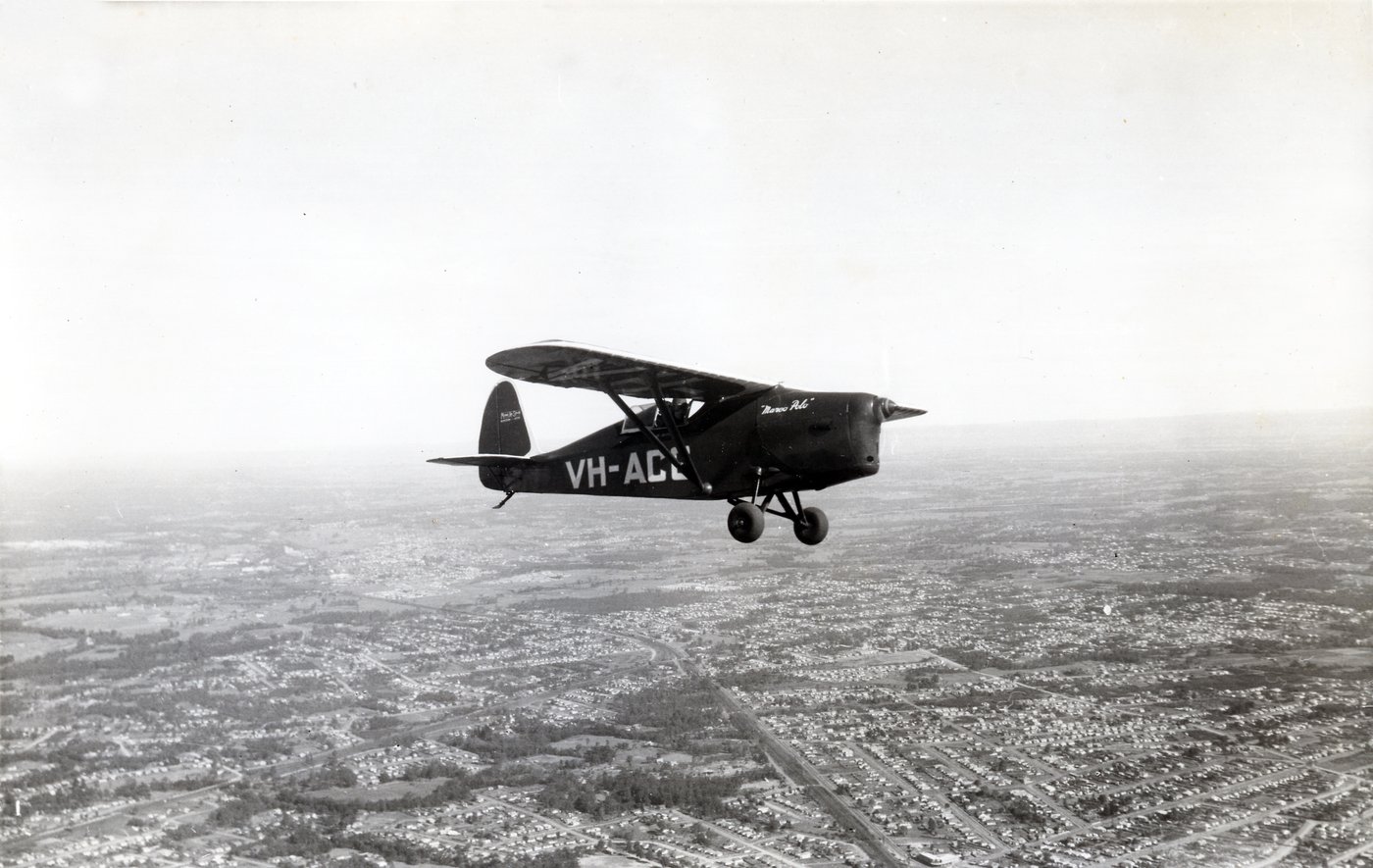
VH-ACG “Marco Polo,” with Howard at the controls, over Parramatta, 31 May 1953.
1955Feb, Bankstown
CAF Reserve
Citizen Air Force training begins
From February 1955, alongside his continuing civil flying, Howard began training with the Citizen Air Force Reserve, Flying Training Flight, No. 2 Wing, flying the DH82 Tiger Moth and Auster under instructors K. Robey, A. Oates and B. Jepson, with progress checks by Flight Lieutenant Winchcombe, Officer Commanding Flying Training Flight.
195621–27 Sep
RAAF
Full-time RAAF training — and a first RAAF solo
Howard commenced full-time flying training with No. 1 Basic Flying Training School, RAAF Uranquinty, on 21 September 1956, flying the CAC Winjeel under Flight Lieutenant Bear. Six days later, on 27 September 1956, he flew his first solo in RAAF service — Winjeel A85-404, Exercise 13 — certified by Flight Lieutenant L.B. Weymouth, Officer Commanding “A” Flight.
19577 Mar
RAAF
Basic Flying Training completed
Howard completed Basic Flying Training at No. 1 Basic Flying Training School, RAAF Uranquinty, on 7 March 1957, having flown the CAC Winjeel through instructors including Flt Lt Bear, Flt Lt Turner, Lt Orr, Plt Off Kempfe, Plt Off Laming, Plt Off Munday, W/Cdr Bolitho and others, together with Link Trainer instrument procedures. His Certificate of Qualification records him passing out as 1st Pilot, Day–Night, on the Winjeel that same day.
1957Apr–Jul
RAAF
Applied Flying Training on the Wirraway, Point Cook
From April 1957 Howard undertook Applied Flying Training on the CAC Wirraway at No. 1 Applied Flying Training School, Point Cook, under instructors including Flg Off Oswald, Flg Off Bellamy, Flg Off MacDonald, Flg Off Baddams, Flt Lt Reynolds and Sqn Ldr McKay — progressing through navigation exercises, air-to-air gunnery, dive bombing and formation flying. He passed his Instrument Flying Rating Test on 19 June 1957, and his Wings Test on 30 July 1957 with Sqn Ldr McKay, leading to the award of his Pilots Flying Brevet on 14 August 1957.
A photograph pasted into the log book from this period, captioned “A Flight, Central Flying School,” shows Howard with fellow trainees B. Seedsman, J. Blair, E. Sundstrup, R. Willimczyic and C. Mercer — almost certainly the same Erik Sundstrup who appears elsewhere on this site as a fellow TAA captain in later years, alongside David Spring Brown.
1961–62NASA support
Operations
On standby for the Mercury space missions
As part of No. 11 Squadron’s Neptune operations, Howard’s log book records support flights tied to two of the earliest NASA Mercury missions — a sortie on 28 November 1961 linked to Mercury-Atlas 5 (the orbital test flight carrying the chimpanzee Enos), and another on 13 February 1962 tied to Friendship 7, John Glenn’s historic first orbital flight by an American.
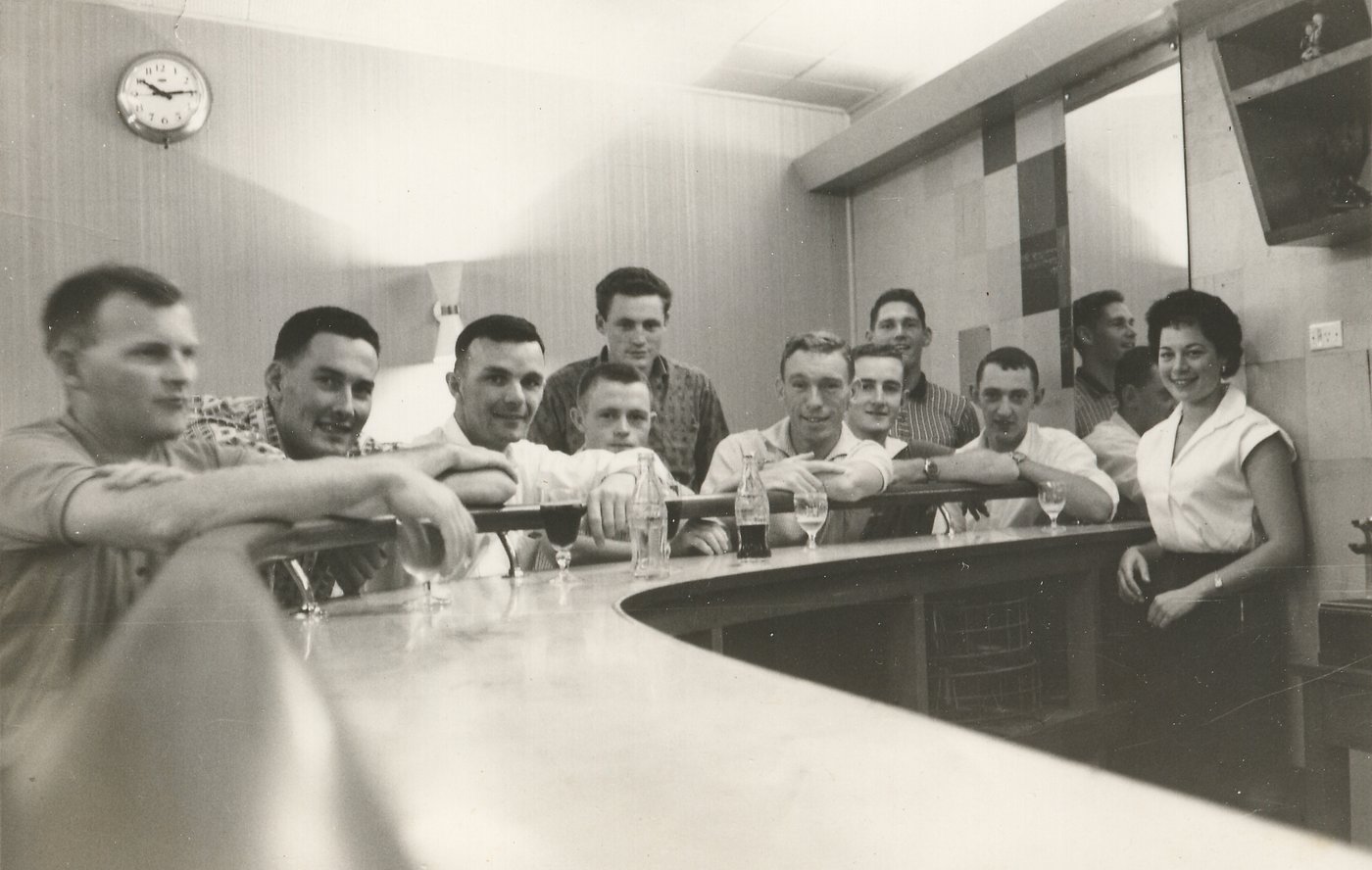
Howard (second from left) with his crew, on standby during the early NASA Mercury space missions.
196323 Mar
Incident
Fuel leak forces a diversion to Mt Isa
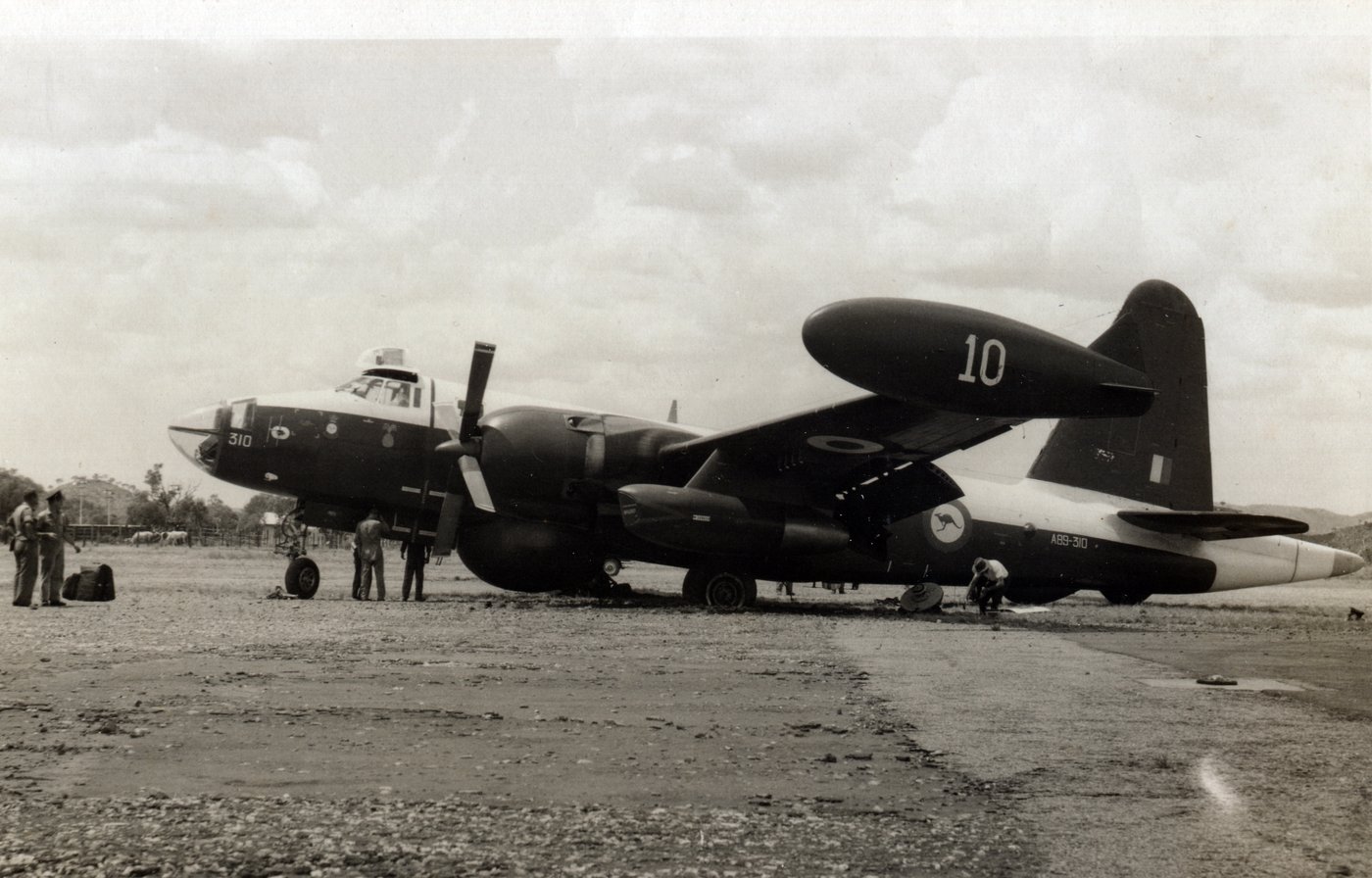
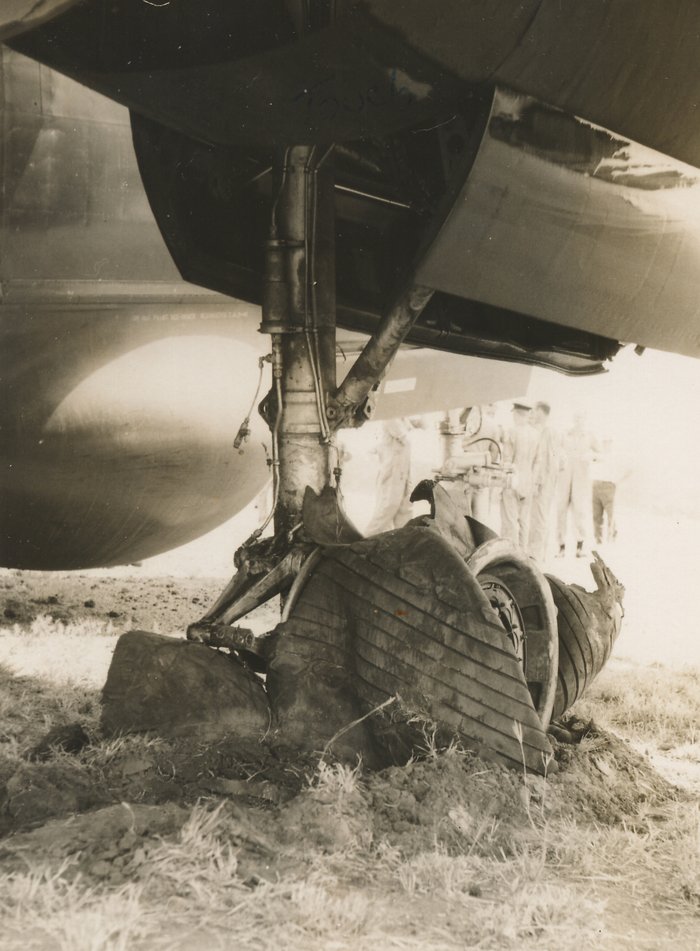
On 23 March 1963, flying Neptune A89-310 from Darwin to Richmond, Howard’s log book records a fuel leak that blew two tyres and forced a diversion to Mt Isa — one of several in-flight incidents noted in his RAAF flying career.
Neptune A89-310 on the ground following the forced landing at Mt Isa, 23 March 1963.
Close-up of the blown tyres and damaged undercarriage.
1956–63RAAF service
Career
Trainers, jets — and heavy aircraft
Over the following seven years of full-time RAAF service (September 1956 – June 1963), Howard flew an exceptionally broad range of aircraft: the CAC Winjeel and Wirraway as trainers, the de Havilland Vampire T33 and Gloster Meteor Mk 7 jets, and the Bristol Freighter transport — before moving into heavy aircraft. He flew the Avro Lincoln only once, on 24 April 1958, before settling into the Lockheed Neptune as his primary type with No. 11 (Maritime Reconnaissance) Squadron, Richmond, where his official Annual Return of Flying Hours recorded 1,058 hours 55 minutes as 1st pilot (day) alone by 30 June 1962 — with further hours still to come before his discharge in June 1963.
1963–64Qantas
Career
From RAAF Neptunes to the Qantas Boeing 707
Following his RAAF discharge in mid-1963, Howard moved into civil airline flying, converting onto the Boeing 707 with Qantas Empire Airways in January 1964. As First Officer he flew the “Kangaroo Route” and the airline’s Asian network — Sydney–Perth–Singapore–Karachi–Cairo and on to London, together with runs to Calcutta, Delhi, Teheran, Hong Kong, Tokyo and Manila — alongside continued currency flying on the DC-3.
Transcription in progress (as of 11 July 2026): Entries from Howard’s Qantas Boeing 707 flying — Log Book 3, from September 1963 onward — are now being added to the flying log book database. Earlier pages of this log book (immediately after his RAAF discharge) have not yet been located and will be added once copies are obtained.
Note on names: Howard R. Morris (the subject of this page) should not be confused with his father, H.K. Morris, Chief Flying Instructor at Morris Air Service, Bankstown, who signs many of the certifications in Howard’s early log book as instructor and Chief Instructor. Both men’s signatures appear frequently through the civil training period.
Recorded on Howard’s official Certificate of Qualification (Form A.174, RAAF), separate from his day-to-day flying log entries, these mark the formal milestones of his RAAF flying career.
Certificate of Qualification:
7.3.1957 — Winjeel, 1st Pilot, Day–Night
14.8.1957 — Wirraway, 1st Pilot, Day–Night. Signed W. Crawford(?), Wg Cdr, Commanding Officer, No. 1 A.F.T.S., Point Cook
15.10.1957 — 1st Pilot Day/Night, Neptune aircraft, Co-Pilot duties. Signed Jack Ingall(?), Sqn Ldr
14.4.1960 — Qualified as Captain, Neptune aircraft. Commanding No. 11 (M.R.) Squadron
Assessments and Endorsements:
19.6.1957 — Instrument Rating awarded, White Card No. 874
14.8.1957 — Successfully completed No. 27 Pilots Course — awarded Pilots Flying Brevet
4.10.1958 — Instrument Rating renewed, White Card. Signed Jack Ingall(?), Sqn Ldr, I.R.E.
4.4.1960 — Green Card issued
8.4.1961 — Green Card extended to June 1961 (AFO 10/A/12)
18.7.1961 — Green Card renewed
30.6.1960 & 30.6.1961 — Category “B1” in accordance with HQOC Cat scheme, No. 11 (M.R.) Squadron
16.7.1962 — Green Card withdrawn; White Card (Piston) awarded
23.7.1962 — Green Card No. 722 (Piston) renewed and endorsed
Note: A number of signatures on these certification pages are difficult to read with certainty (flagged with “?” above) — likely surnames include Crawford, Ingall, Winchcombe and Brian, all officers of No. 1 A.F.T.S. Point Cook or No. 11 (Maritime Reconnaissance) Squadron. These pages record qualifications and endorsements rather than individual flights, and are therefore not included in the searchable flying log database.